
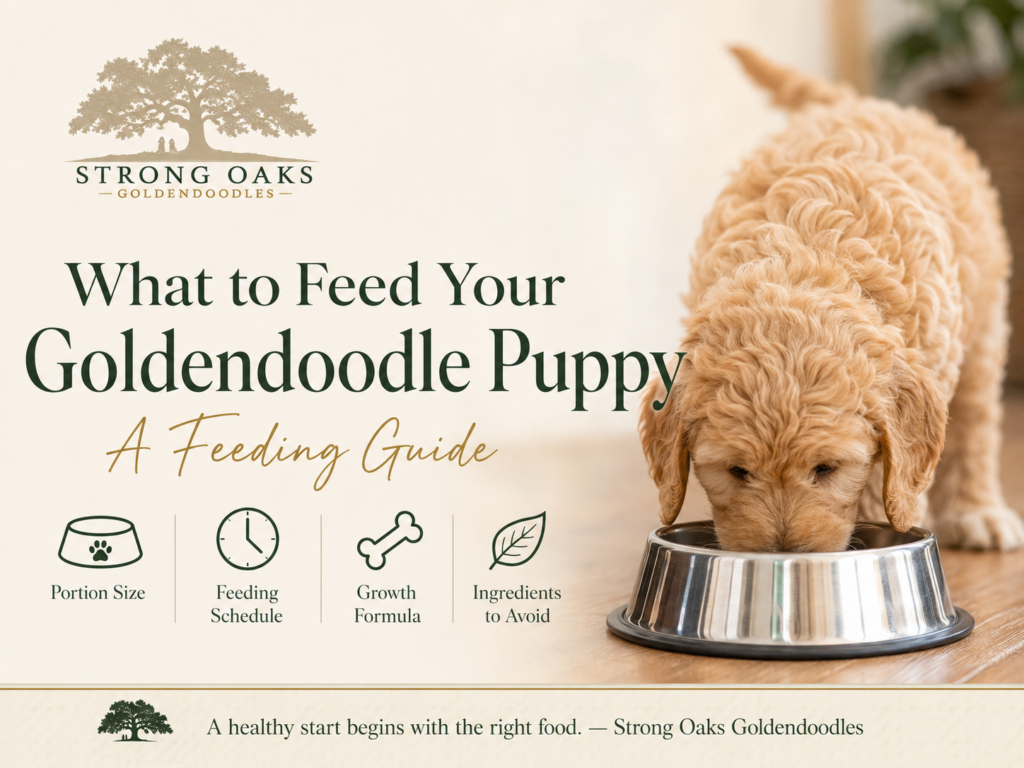
One of the most common questions new puppy owners have is also one of the most important: what should I actually be feeding this dog? Nutrition during the puppy stage shapes growth, joint development, energy levels, and lifelong health — getting it right matters more than most people realize.
Here’s a practical, honest guide.
Why Puppy Food Matters More Than People Think
Standard Goldendoodle puppies grow fast — from a few pounds at birth to 50 to 80 pounds as adults within about a year and a half. That rate of growth puts real demands on bones and joints, and the wrong nutrition during this window can contribute to problems down the road, including the kind of hip and elbow issues our 5-year health guarantee specifically covers.
Look for Foods Formulated for Large-Breed Growth
This is the most important thing to understand before choosing a food. Large, fast-growing puppies need a specific calcium-to-phosphorus ratio and controlled calorie density to support healthy bone and joint development — growing too quickly can actually contribute to skeletal problems.
The food doesn’t have to say “large breed puppy” on the bag specifically. Since 2016, AAFCO nutrient standards require that any food labeled “growth” or “all life stages” meet large-breed growth requirements unless the label specifically states it isn’t formulated for large-size dogs. So a well-formulated All Life Stages food can absolutely be appropriate — what matters is checking the nutritional adequacy statement on the bag, or simply calling the manufacturer if you’re unsure.
What We Feed at Strong Oaks
Our adult and parent dogs eat Diamond Naturals All Life Stages Chicken & Rice Formula — a family-owned, American-made food with guaranteed probiotics. Puppies grow up eating this food in our home and puppy building, which means continuing with it for at least the first week or two after pickup is the smoothest option for your new puppy’s stomach.
If you’d like to research and compare other brands before deciding what to feed long term, dogfoodadvisor.com is a genuinely useful independent resource that rates dog foods based on ingredients and quality.
How Much to Feed
Follow the feeding guidelines on the bag as a starting point, based on your puppy’s current weight — not their expected adult weight. Adjust from there based on body condition. You should be able to feel your puppy’s ribs with light pressure but not see them prominently, and they should have a visible waist when viewed from above.
Most 8 to 12 week old puppies do well with three meals a day. Around four months, many families transition to two meals daily, which most Goldendoodles stay on for life.
A Sample Feeding Schedule
8-12 weeks: three meals daily, spaced roughly 6-8 hours apart.
3-6 months: three meals daily, gradually transitioning to two as appetite and schedule allow.
6 months and beyond: two meals daily, morning and evening.
Consistency in timing matters as much as the amount. Dogs — especially puppies — do well with predictable routines, and a consistent feeding schedule also supports the potty training habits we cover in our first week guide.
Switching Foods
If you do decide to switch from Diamond Naturals to a different brand, do it gradually over 7 to 10 days. Mix increasing amounts of the new food with decreasing amounts of the old food. A sudden full switch is one of the most common causes of puppy stomach upset and loose stool.
Treats and Table Food
Treats are useful for training, but they add up calorically fast in a small puppy. Keep treats to roughly 10% of daily caloric intake, and favor small, low-calorie training treats over large biscuits during active training sessions. Our training guide covers how food-motivated training works well with this breed.
Table food is best avoided, both because human food often isn’t nutritionally appropriate for puppies and because several common foods are genuinely dangerous for dogs — more on that below.
Foods to Avoid
Some foods are toxic to dogs and should never be given under any circumstances: chocolate, grapes and raisins, onions and garlic, xylitol (a sugar substitute found in many sugar-free products), macadamia nuts, and alcohol. Cooked bones — including chicken and turkey bones — can splinter and cause serious internal injury and should also be avoided.
Fatty table scraps, even when not toxic, can trigger pancreatitis in dogs, which is a serious and painful condition. When in doubt about a specific food, it’s safer to skip it.
Working With Your Vet
Every puppy is a little different, and your veterinarian is the best resource for nutrition questions specific to your dog — particularly if you notice any digestive sensitivity, unusual weight gain or loss, or coat or skin issues that might point to a food sensitivity. Establishing a relationship with a vet early, as we cover in our exercise guide, gives you a resource for exactly these kinds of questions.
The Bottom Line
Good nutrition during the puppy stage is one of the most impactful things you can control for your Goldendoodle’s long-term health. A food formulated to support large-breed growth, a consistent feeding schedule, gradual transitions, and avoiding genuinely dangerous foods will set your puppy up well for the years ahead.
If you have questions about feeding a Strong Oaks puppy specifically, give us a call at 828-408-3108. You can also explore our full Goldendoodle Resources library for more guides on puppy care, or start with our adoption application if you’re ready to bring a Standard Goldendoodle home.
Ready to Find Your Perfect Goldendoodle?
Family-raised in the Blue Ridge Mountains of NC. Health-tested parents, 5-year guarantee, and 30+ years of experience.