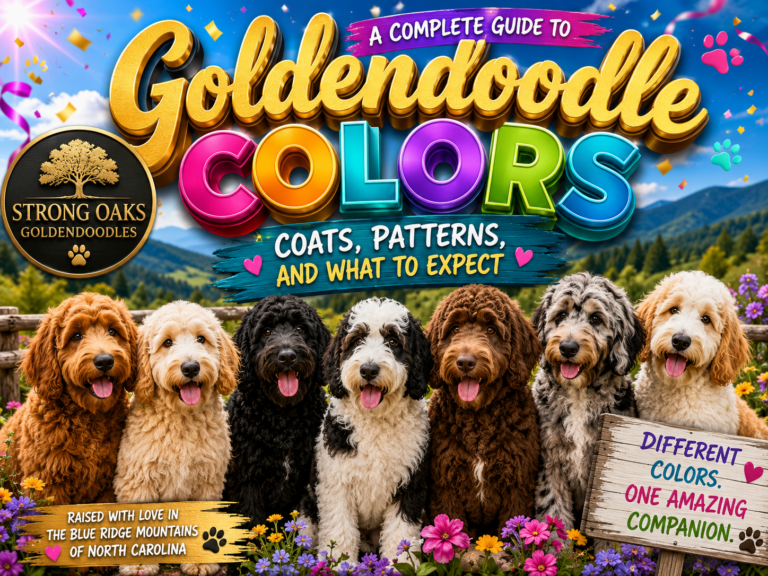
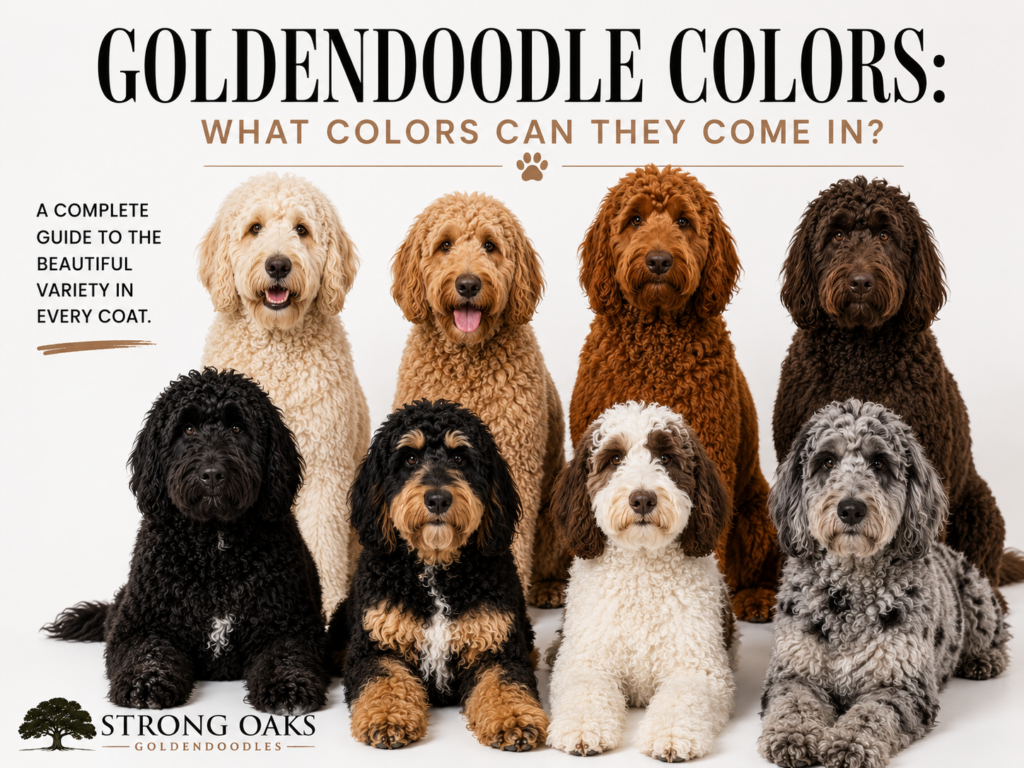
One of the most fun parts of researching Goldendoodles is discovering just how much variety there is in coat color. Unlike purebred dogs with strict breed standards, Goldendoodles can come in a surprisingly wide range of colors — and the combination of Golden Retriever and Poodle genetics is responsible for all of it.
Here’s a complete guide to Goldendoodle colors, what causes them, and what families should know before choosing a puppy.
Where Goldendoodle Colors Come From
Goldendoodle coat color is determined by the genetics of both parent breeds. The Golden Retriever contributes a fairly limited color range — creams, golds, and reds. The Standard Poodle, on the other hand, comes in an exceptionally wide range of colors — black, white, brown, apricot, red, silver, blue, cafe au lait, and more.
When you cross those two breeds, the possibilities expand significantly. The Poodle’s color genetics tend to dominate in many pairings, which is why Goldendoodles can appear in colors that a purebred Golden Retriever never would.
Understanding coat color genetics is one of the things Embark DNA testing helps with — our parent dogs are all tested through Embark, which includes coat color genetics alongside the health screening. You can read more about why we DNA test on our Health Guarantee page and our post on why health-tested parents matter.
The Most Common Goldendoodle Colors
Cream and Apricot
These are the most common Goldendoodle colors and the ones most people picture when they think of the breed. Cream ranges from nearly white to a warm ivory. Apricot is a soft peachy-gold — the color most associated with the classic Goldendoodle look. Both come from the Golden Retriever’s color range amplified through Poodle genetics.
Gold and Red
Gold Goldendoodles carry the warm honey tones of the Golden Retriever. Red is the deeper, richer version — almost mahogany in some dogs. Red Goldendoodles are highly sought after and tend to come from red Poodle lines crossed with darker Golden Retrievers. Our Samson — a red Standard Poodle — contributes the potential for richer coat tones in our litters. You can meet our dogs here.
Chocolate and Brown
Chocolate Goldendoodles come from brown Poodle genetics. They range from a medium milk chocolate to a deep, dark brown. These are stunning dogs and very popular with families who want something different from the classic golden tones.
Black
Black Goldendoodles are less common but striking. They come from black Poodle lines and can appear as solid jet black or with small amounts of white on the chest or paws. Black coat genetics can sometimes produce puppies that lighten as they mature — a process called clearing or fading.
Parti and Phantom
Parti Goldendoodles have two distinct colors — typically white with patches of another color. Phantom Goldendoodles have a base color with specific markings in a second color on the muzzle, eyebrows, chest, and legs — similar to the pattern on a Doberman. Both are rarer and tend to generate a lot of interest when they appear in a litter.
Merle
Merle is a distinctive mottled pattern that creates a marbled effect across the coat — blue merle, red merle, and chocolate merle being the most common variations. Merle in Goldendoodles comes entirely from the Poodle side. It’s worth noting that merle breeding requires careful genetic consideration — breeding two merle dogs together can produce puppies with serious health issues. Responsible breeders who produce merle Goldendoodles test their parent dogs carefully.
Do Colors Fade?
Yes — and this catches many families off guard. Goldendoodle puppies are often born a different color than they’ll be as adults. This is the Poodle influence at work. Poodles commonly carry a gene that causes their coat to lighten or change color as they mature — a process called progressive graying or clearing.
A puppy born dark brown may lighten to a café au lait by adulthood. A black puppy may develop silver or blue tones. An apricot puppy may lighten to cream. This doesn’t happen with every dog and it’s more pronounced in some lines than others — but it’s worth knowing before you fall in love with a puppy’s color at eight weeks.
Does Color Affect Temperament or Health?
No — coat color has no connection to temperament or health in Goldendoodles. A red Goldendoodle and a cream Goldendoodle from the same litter will have the same genetic health profile and the same temperament potential. Color is cosmetic.
What does affect temperament and health is genetics more broadly — the health testing of the parent dogs, the quality of the breeding program, and how the puppy was raised in those first critical weeks. Our Goldendoodle temperament guide covers what to actually look for, and our ENS and early socialization post explains how we build that foundation at Strong Oaks.
Choosing a Color
If you have a color preference, share it with us when you apply. We can’t guarantee specific colors — genetics doesn’t work that way — but we know our dogs’ genetics well and can give you a realistic sense of what colors are likely in an upcoming litter.
What we’d encourage families not to do is choose a puppy primarily based on color. The puppy that’s the right fit for your family in terms of temperament, energy level, and personality matters far more than whether they’re gold or red or cream. A good breeder helps you find the right match — and that’s exactly what we do at Strong Oaks.
You can start the process with our adoption application or call us directly at 828-408-3108. We serve families throughout North Carolina, South Carolina, Virginia, Tennessee, Georgia, and beyond.
Ready to Find Your Perfect Goldendoodle?
Family-raised in the Blue Ridge Mountains of NC. Health-tested parents, 5-year guarantee, and 30+ years of experience.